
What Is RFID and How Does It Work in Retail?
August 19, 2026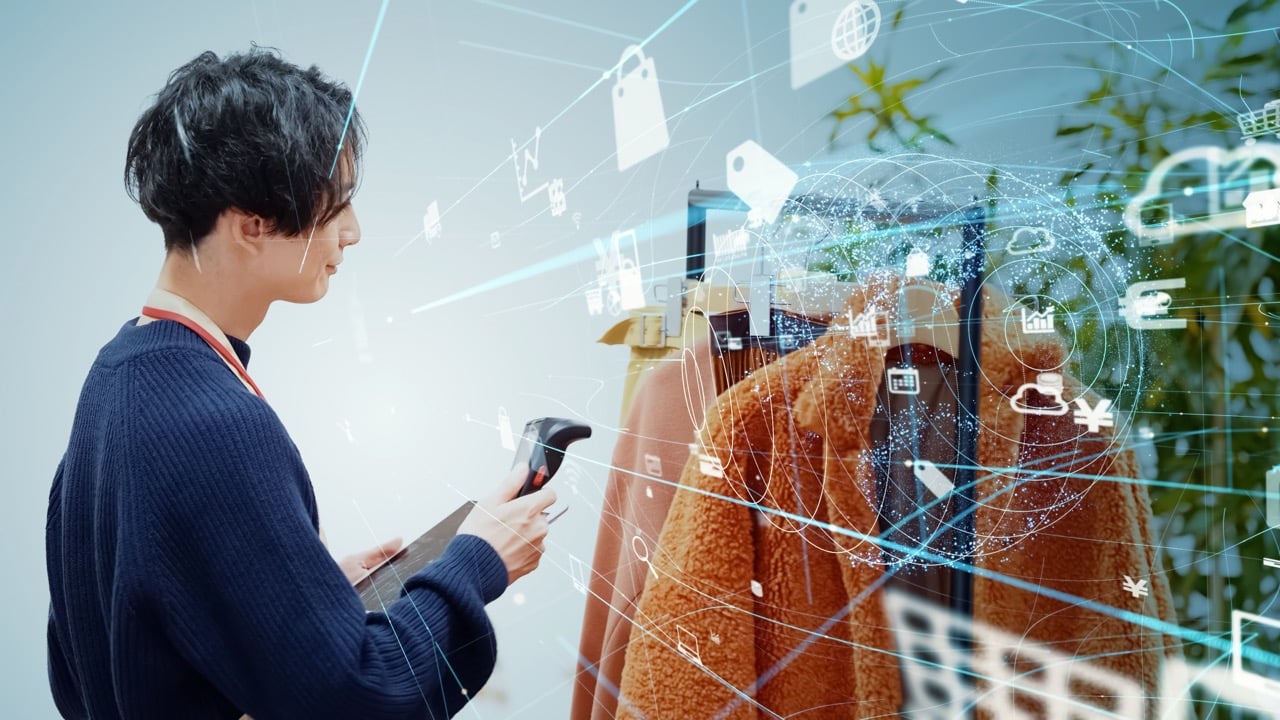
If your inventory says an item is in stock, but employees can’t find it or the product ends up being unavailable after a customer placed an online in-store pickup order, it can cost your business sales and customer loyalty. RFID helps solve these challenges by providing faster, more accurate inventory tracking.
While most people assume RFID is used primarily in distribution centers for pallets or case-level tagging and tracking, one of the most useful environments for it is in retail stores. Using RFID in stores is an advanced method that’s being used more frequently as technology advances. So what is RFID and how does it work in retail settings? Keep reading to learn more about this new technology and how it can change retail store experiences for the better.
What Is RFID?
RFID (Radio Frequency Identification) is automatic product tracking that uses wireless radio waves and microchips (tags) attached to products. Often used in retail, it transmits data to readers without needing to be in direct line of sight like traditional barcodes. This allows entire shelves or shopping carts to be scanned at the same time, in seconds, while providing real-time tracking, automatic product identification, and improved inventory data.
RFID vs. Barcode Scanning
Barcode Scanning vs. RFID Technology
| Barcode | RFID |
| Scans one item at a time | Scans hundreds of items simultaneously |
| Requires line of sight with barcode | No line of sight necessary |
| Manual operation | Mostly automated |
| Slower inventory counts | Almost instant inventory counts |
| Less inventory visibility | Real-time inventory tracking |
How RFID Works in Retail
RFID is one of the best new retail technologies that in-store retailers are utilizing. Some of the newest mobile computers from ZEBRA and numerous other top brands are starting to include the technology for ease of service, improved accuracy, and more. POS systems and other in-store technologies include RFID capabilities to offer advantages like BOPIS accuracy, cart verification, and more.
Related Content: Enhanced Efficiency and Customer Experience with Next-Gen POS Systems
Key Advantages of RFID Technology in Retail
1. Enhances Inventory Tracking
One of the major advantages of using RFID technology in retail is improving inventory tracking up to 98-99% accuracy. Traditional tracking options are usually limited to barcode scanners, which means that your inventory accuracy is only as accurate as your employees and the major spaces your inventory is in.
With traditional barcode scanners, it’s easy for things to get missed, and it requires a direct line of sight between the laser and barcode.
RFID technology reads large numbers of tagged items in seconds—without having to unpack boxes or directly view labels. The result is a faster, easier, more accurate experience with inventory tracking both in store and online.
2. Increases BOPIS Speed and Accuracy
Improved inventory tracking with retail RFID technology also leads to faster speed and greater accuracy with BOPIS (buy online, pick up in store) transactions. With today’s customers utilizing omnichannel services and often preferring the convenience of online shopping, RFID makes the bridge between in-person and online easier.
With older barcode scanning technology, trying to keep inventory in check is often extremely tedious, time-consuming, and more prone to errors and phantom inventory challenges. While traditional inventory tracking uses manual counts and slow, outdated practices, using RFID technology is instantaneous and automatically tracks changing stock levels. The result is a smoother experience both in store and with buy-online, pick up in store transactions.
3. Improves Cart Verification and Automates Checkout Experiences
One of the lesser-used but growing advantages of RFID is improved cart verification, AI exit technology, and automated checkout experiences.
 The best example of this is Sam’s Club’s Scan & Go checkout technology. Using a combination of retail RFID technology, advanced AI features, and computer vision with the exit arches, it automatically tracks inventory in carts. The result is better inventory tracking, faster and easier customer checkout experiences, fewer issues with theft, and more.
Cart verification and automated checkout experiences are some of the newest up-and-coming technologies that large retail companies are turning to. Because it saves customers and workers ample amounts of time while improving customer experience and creating a frictionless checkout experience, we wouldn’t be surprised to see it in more stores in the coming years.
4. Prevents Theft and Reduces Loss
Retail RFID technology helps prevent theft and reduce lost inventory in stores through multiple ways:
- Smart Gates: Exit door scanners instantly detect active tags that haven’t been paid for
- Item Identification: RFID specifies the exact item or items that are unpaid for
- Internal Awareness: Staff are aware of IDs that correlate with the specific product
- Supply Chain Visibility: Items are tracked from factory to warehouse to prevent loss
- Theft Trends: Data on times and days when theft occurs are recorded
With theft trend data recorded, security precautions and preventative measures like cameras and guards can be placed throughout the store. Certain items that are stolen more frequently could be put behind a locked cabinet as well.
RFID makes it easier for businesses to see common theft patterns to better prevent them.
5. Reduces Food Spoilage in Grocery Stores
Another standout perk of RFID is the ability to reduce food spoilage and waste in grocery stores. Here are some of the unique ways RFID works to prevent food spoilage:
- RFID tags with temperature sensors continuously monitor food and temperatures
- Real-time data helps identify issues proactively rather than reactively
- Manages stock levels to prevent overstocking and food waste
- Reduces perishable goods by ensuring old stock is prioritized with FIFO (first in, first out)
- Encourages efficiencies: better temperature control, less waste, optimized packaging
Overall, RFID has incredible power to reduce waste and the economic inefficiencies that happen in retail. Instead of throwing out tons of spoiled food every year, it allows retailers to optimize inventory, keep temperatures stable, and prioritize items that need to sell first.
Why Retailers Are Turning to RFID Technology
While RFID is still going strong in warehouses, it’s more useful than ever in retail stores. The positive effects of using RFID in your store include:
- More accurate inventory tracking
- Faster cycle counts
- Enhanced customer service
- Reduced out-of-stock issues
- Improved omnichannel experiences
Those are only a few of the unique advantages that you can experience through utilizing this new technology and modernizing your storefront.
Related Content: Why Modernizing the Shopping Experience Matters
How to Add RFID to Your Retail Store
One of the easiest ways to ensure RFID is part of your retail technology is to upgrade your POS equipment and mobile computers throughout your store. This doubles as a way to improve customer experience. Using RFID with new retail tech comes with unique benefits that help improve your current store and future-proof your business.

If you’re considering adding RFID or new retail technology to your store, our team at RTI is an all-in-one retail tech service provider and can help you out. With decades of experience helping companies find their ideal POS systems, mobile computers, and retail technology, we make switching out old devices for new ones fast and easy, so you can see the positive effects in real time.
Ready to get started?
At Retail Tech Inc. we offer high-quality technology hardware solutions through exceptional standards in service, reliability, and cost effectiveness. As a seamless extension of your IT team, we provide end-to-end support and service every step of the way, from planning to procurement, deployment, maintenance and beyond. Contact our experts to get your personal technology solution today!