


What Retailers Need to Know About the GS1 Barcode Transition
October 01, 2026
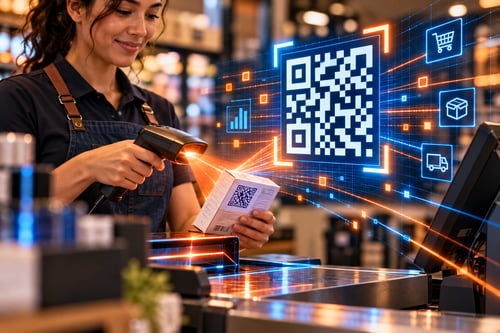
For over 50 years, retailers have been using traditional UPC and EAN barcode technology with their retail hardware and technology systems. In recent years, barcodes and tracking technology have evolved enough that GS1, the global leader in barcode technology, is planning a world-wide introduction of QR codes in 2027, known as GS1 Sunrise 2027, in point of sale systems.
While traditional barcodes won’t immediately disappear, this first stage will integrate the new technologies in retail locations around the world. So, what does this mean for businesses who use tracking codes and identification numbers with their POS systems and other retail equipment? Here’s what retailers need to know about the GS1 barcode transition.
What is GS1 Sunrise 2027?
GS1 Sunrise 2027 is the global initiative to transition retail point of sale systems from using traditional one-dimensional UPC barcodes to two-dimensional QR codes by the end of 2027. While UPC barcodes won’t disappear overnight, the goal is to implement both kinds of codes in a transitional phase so they coexist.
To stay compliant with the new GS1 codes, retailers should begin evaluating their current technology and see if their POS firmware, optical scanners, and other retail technology need to be updated before the transition.
Related Content: 5 Ways to Future-Proof Your Retail Technology and Business
What’s the Difference Between 1D Barcodes and 2D Barcodes?
The major differences between 1D barcodes and 2D barcodes are mainly in the overall design, efficiency, and unique features they offer. GS1 QR code and traditional UPC (universal product code) barcode are in the overall design, how they are used, and their unique features.
Traditional 1D Barcodes
Traditional UPC (universal product code) and EAN (European article number) barcodes identify products using a GTIN (global trade item number) so POS systems can retrieve information about the product such as pricing, brand, or model. To scan and retrieve data, they require a centered alignment and might take a moment to pull up information.
 Newer 2D Barcodes
Newer 2D barcodes from GS1 feature similar identification advantages alongside newer product technology that unlocks a world of information and offers even faster reading capabilities. The GS1 DataMatrix, QS1 QR code, and QS1 Digital Link offer unique benefits for retailers, healthcare, medical supply chains, and more with less rigid scanning from numerous angles, faster response times, and more information from a single scan.
Why is the GS1 Barcode Transition Happening?
The current system using UPC and EAN barcodes is becoming more outdated as time goes on. With improved technology in scanners, POS systems, and retailer software, retailers are already moving to QR codes due to their unique benefits.
Making the switch will help retailers scan codes faster and from almost any angle, store more data (expiration dates, lot numbers, serial numbers, etc.) and offer instant insights, and adjust information in real time.
Related Content: Enhanced Efficiency and Customer Experience with Next-Gen POS Systems
Advantages of Switching to GS1 2D Barcodes in Retail
While the idea is similar to a traditional barcode, the new GS1 QR codes offer greater benefits for both retailers and consumers. The largest advantages they offer include:
- Easier, faster scanning from multiple angles using a 2D design
- Better safety and tracking data for retail management to ensure compliance
- More robust, real-time product data for retailers and their consumers
- Direct consumer engagement with smart phones and in-store shopping
- Immediate retail insights including allergen information, ingredients, promotions, etc.
What Does the GS1 Barcode Transition Mean for Retailers
While the idea of new retail technology can be daunting, retailers don’t need to immediately update their technology or retire their legacy equipment. During the interim phase, retailers can slowly transition out older systems to incorporate the new barcode technology, but it doesn’t have to be all at once. For now, the 1D barcodes aren’t going anywhere.
To prepare your company for the transition, retailers can update their POS systems and retail technology to newer options equipped to handle both 1D and 2D barcodes. Over time, retail businesses can also add newer scanners, cameras, and other equipment to read the new barcodes. While the new barcode technology doesn’t mean you have to drop everything,
Upgrading your equipment early can help you integrate the new technology sooner rather than later so your technology is up to date and you can test the new equipment before the official rollout, but you don’t need to upgrade to the newest options out there. If you’re hoping to upgrade to a newer used option, our team at Retail Tech can help you get started.
How Retailers Can Prepare for the GS1 Barcode Transition
With the GS1 barcode transition happening in 2027, retailers can start early to check that their retail technology and equipment works with the new changes. Going through and making system updates or replacing legacy equipment that works with both the old 1D UPC barcodes and new 2D QR codes is a great start for your retail business.

If you need help replacing your current systems, making upgrades, and checking whether your current equipment fits the new GS1 initiative, our team at RTI can help you with every step as an all-in-one retail tech service provider. We help update and maintain equipment, source new POS equipment that works with the 2D barcodes, and install everything as the changes draw near.
Ready to get started?
At Retail Tech Inc. we offer high-quality technology hardware solutions through exceptional standards in service, reliability, and cost effectiveness. As a seamless extension of your IT team, we provide end-to-end support and service every step of the way, from planning to procurement, deployment, maintenance and beyond. Contact our experts to get your personal technology solution today!